

👋 Hey, I’m Aruna. Surface Tension is my weekly exploration of insights and thought provoking quotes from the books I read, bundled into one idea worth sitting with. For more, browse my book notes and long form articles.

The Story phase
Blaise Pascal, the 17th-century French mathematician and philosopher, once apologized for the length of a letter with a line that has resonated with writers for centuries: “I have made this longer than usual because I have not had time to make it shorter.”
This reverses a very common assumption about writing. We often treat long, elaborate writing as the more serious kind, as if verbal abundance were mere proof of intellectual depth. But Pascal points in the other direction.
The harder thing isn’t expansion. It’s reduction.
This idea was brought home for me when I was reading the book Clear and Simple as the Truth, where the same concept appears in one unforgettable line: “My style will not be at all florid; my expressions will be simple as the truth.”
Seen this way, the whole point of writing starts to make sense, and it applies to any type of communication. It’s a responsibility to show the truth, especially when people would otherwise not notice it, in the clearest, most concise way possible, without drawing attention to the writing itself.
Concision and truth also work together naturally. When a sentence, or any piece of writing, is stripped to its bare bones, the point being made gets clearer and clearer. The writer exposes the reader to the truth with no language in the way.
This is such a fundamental element of communication that it applies to any art form. A good example is Picasso’s famous bull painting. He goes through many iterations, reducing the drawing through successive states until what remains is nearly skeletal. The final painting has almost no muscle, no shading, no ornament, but it’s more legible because that serial reduction was exactly the right choice to bring the point across.
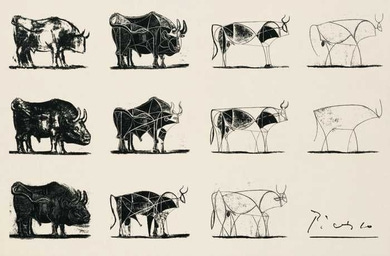
The point isn’t bareness for its own sake, of course. It’s that removal often can make the truth more visible.
But this raises an immediate question: what if what we think is the truth isn’t actually the truth?
What if we’re wrong?
For one thing, it’s still far better to make a clear point—even at the risk of being proven wrong—than to hide uncertainty in language. And more importantly, even when you are proven wrong, that at least provides a data point that moves the world in the right direction.
The Structure phase
A way to visualize this is through the concept of signal and noise, the kind you’d see from a digital instrument.
Here is some data collected from one.
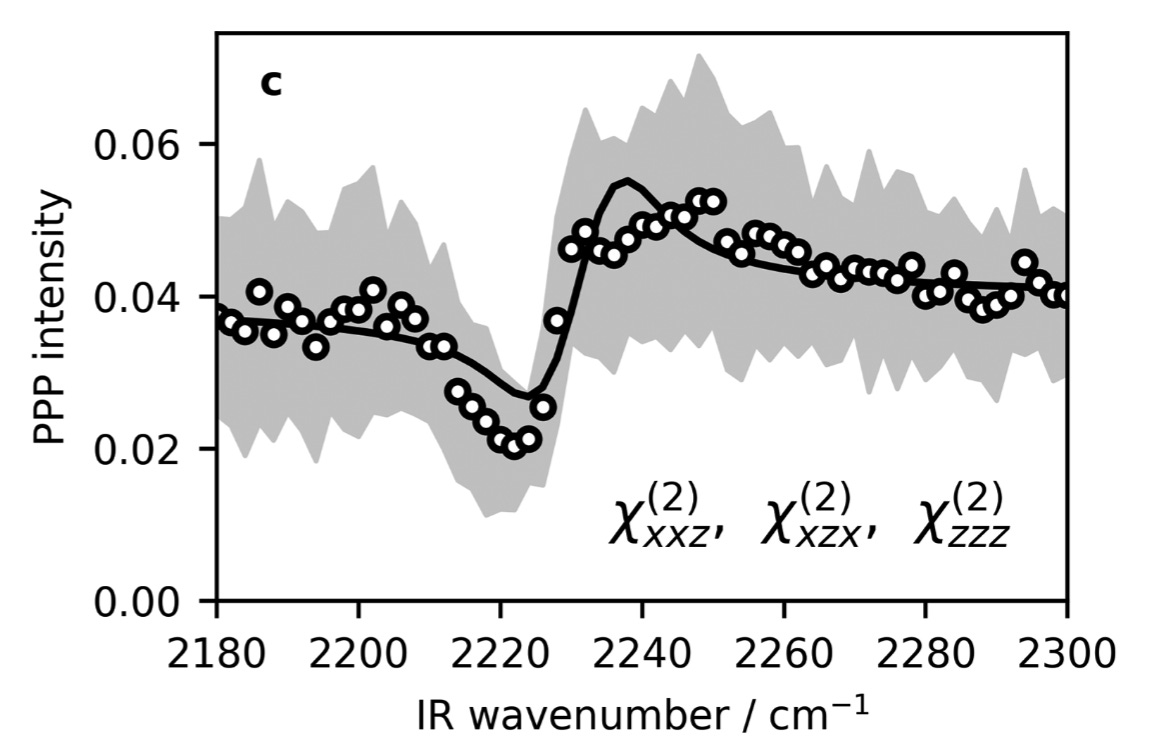
The shaded areas are the noise. The black circles are the real data. The black line is a model fitted to that data. Even though this line doesn’t capture the true shape of the data, you technically can’t rule it out, because the noise covers such a large area that it leaves room for many interpretations, so many possible truths.
But there should only be one.
Now take the same system, measured with a better instrument, one with a much stronger signal-to-noise ratio.
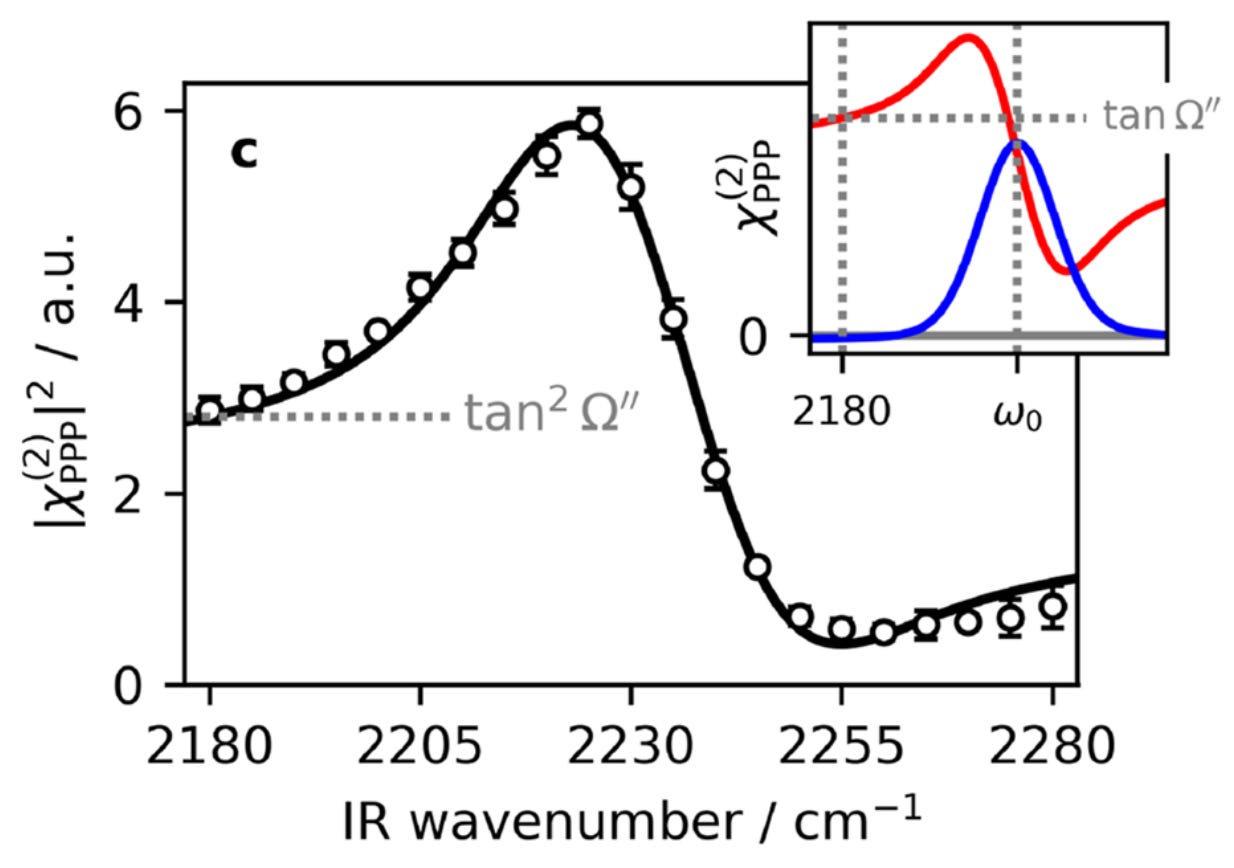
This time, the noise is almost negligible. The truth comes into focus, and the model clearly doesn’t capture the true shape of the data. The noise isn’t there to obscure that anymore.
What a good instrument does, then, is exactly what good writing does: it clears away the distortion so the truth has nowhere to hide, even at the risk of exposing an uncomfortable one.
A good instrument, in this sense, isn’t the one that produces the most activity on a screen. It’s the one that gives the cleanest signal with the least distortion. In practice, that means at least three things.
Less noise means more recoverable truth: The point isn’t to maximize output but to make the underlying truth easier to see.
A wrong reading is still informative if it’s clear: When the signal is clean enough, the error can be recognized and corrected. But when noise dominates, almost any interpretation can be made to look plausible.
More freedom can produce bad interpretations: A noisy dataset can often be fit in many flexible ways, and that freedom can feed into the trap of wishful thinking, producing conclusions that feel sophisticated but have no real truth beneath them.
The interface
This is what purple prose amounts to. It’s just noise. It confuses the reader and makes it hard to see the truth.
In this sense, clarity is less about minimalism and more about accountability on the part of the writer.
Only the language that is precise enough to be wrong is good enough to be useful.
If you’re not prepared to be wrong, you’ll never come up with anything original.
- Sir Ken Robinson
In your work, your relationships, and your everyday life, where does vagueness create the appearance of depth and sophistication while preventing you from seeing the real truth?