


There are two types of readers when it comes to quitting a book before it ends.
There’s the completionist reader who says, “We must finish what we started.” And on the other end, there’s the selective reader who says, “life is too short to finish a bad book.”
I’ve been both of these types in the past.
When I’m reading a book, if the first part was interesting but the second half gives me nothing, I still used to push myself to the end.
I was stuck in the sunk cost fallacy.
But I’ve been on the opposite end, too. When I couldn’t connect with a book, I’d quit instantly, without even questioning why, just because I “didn’t feel like it.”
It took me a while to realize neither of these approaches actually solves the real problem, that is, how to read more books?
Because quitting a book doesn’t guarantee the next one will magically be better.
It just wastes time you could’ve spent reading a better book.
This actually led me to read less. The number of books I read per year kept getting low.
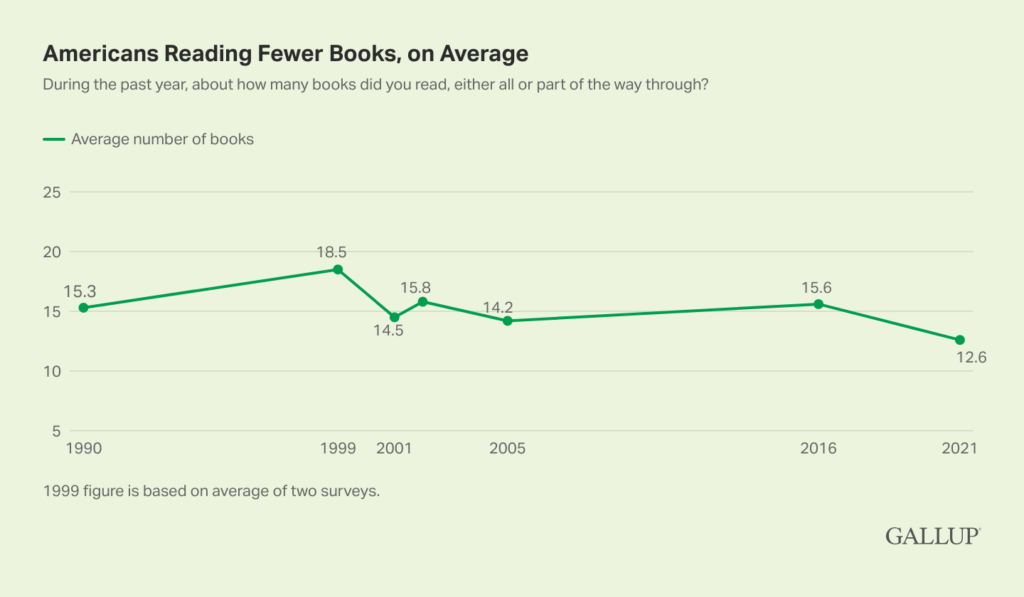
And this isn’t just me. Gallup’s 2021 report shows that Americans are reading fewer books than ever before. So the struggle to stay engaged with a book is a widespread reading pattern.
After some time, I realized what the missing piece of this puzzle was: I never asked why I didn’t like the book in the first place.
Once I started doing this, everything made sense.
Picking up a book you won’t like is inevitable—it happens more often than we’d like it to happen. So quitting isn’t a failure; it’s just a part of the process.
But understanding why I had to quit a certain book reduces the odds that I’ll quit the next one.
Eventually, I can choose books with a high chance that I’ll actually finish them.
This is how you read more books by quitting more—by quitting deliberately.
Read the full post here.