

👋 Hey, I’m Aruna. Surface Tension is my weekly exploration of insights and thought provoking quotes from the books I read, bundled into one idea worth sitting with. For more, browse my book notes and long form articles.
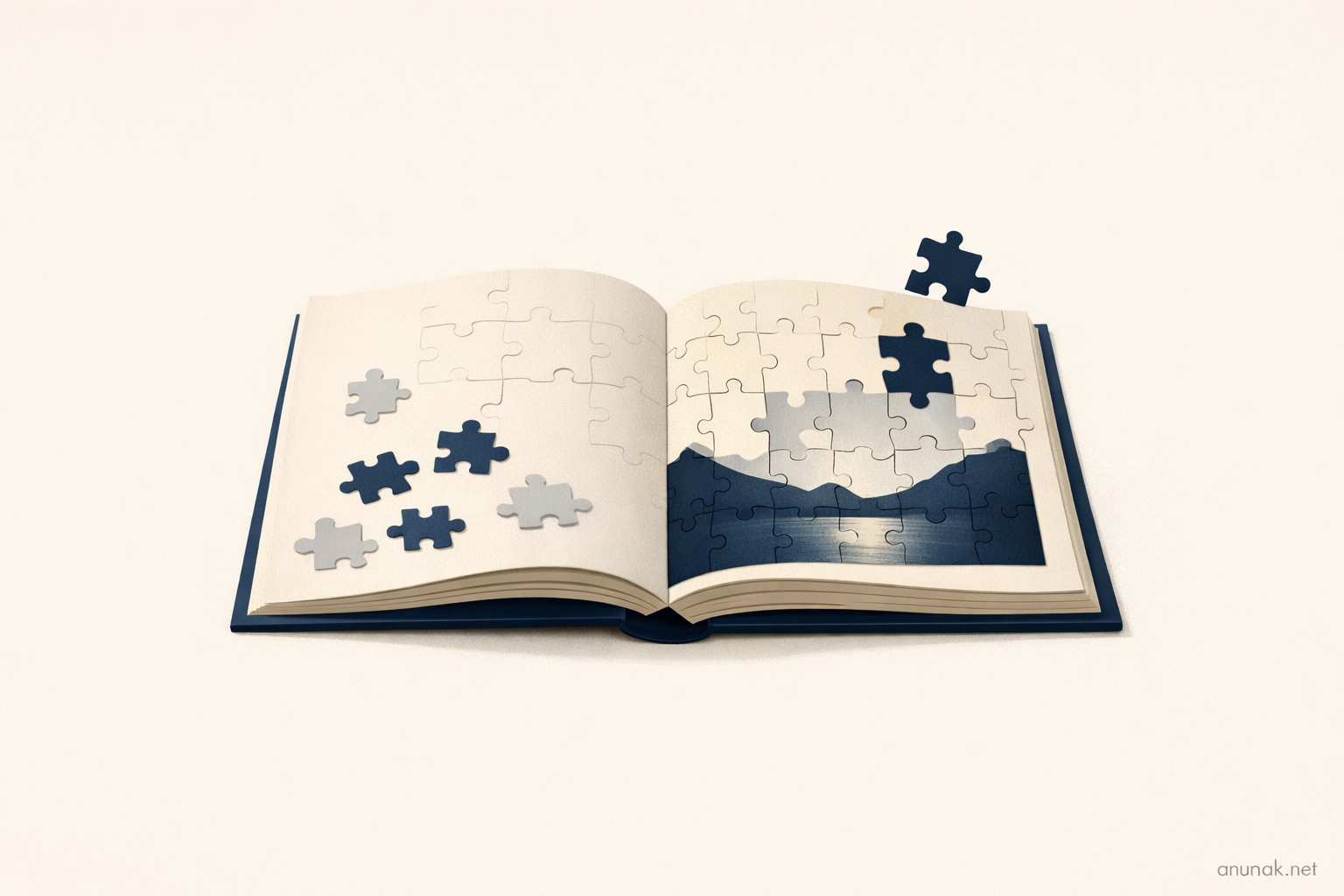
The Story phase
Incidentally, I use the word reader very loosely. Curiously enough, one cannot read a book: one can only reread it. A good reader, a major reader, an active and creative reader is a rereader. — Vladimir Nabokov
For the past six years, I have been reading roughly a book a week. And for most of those six years, I was doing it wrong. But not in any obvious way, so I couldn’t see it until very recently.
My instinct, like most readers’, was to slow down at anything that felt important while I’m reading: underline it, sit with it, and try to extract its meaning on the spot. The logic seemed sound, that the more carefully you read, the more you take away.
But here is the problem I kept running into. I would finish a book and realize that the passages I had treated as important in chapter three meant something entirely different by chapter eleven. Or even worse, some of the things I had moved past without a second thought turned out to be the most load-bearing ideas in the whole argument of the book. I hadn’t missed them because I was careless. I had missed them because I didn’t yet know what the book was really about.
That’s the strange thing about reading a book for the first time. You are inside it. You don’t yet know its shape, its priorities, or what will eventually matter most. So you can’t yet ask the right questions, because the right questions only become visible once you’ve seen the whole thing.
The advice on these two reading approaches—read as quickly as possible and revise carefully, or read really slowly—are balanced almost equally. But the more I read, the more clear it became that finishing the book as quickly as possible and spending more time revising it gave me the biggest returns.
But why is that? Can I rationalize this?
The Structure phase
There is a branch of psychology called Gestalt psychology that holds the answer.
Gestalt psychology describes a threshold in perception, a point at which fragmented parts suddenly resolve into a coherent whole. Before you cross this threshold, the pieces don’t add up, and nothing makes much sense. You can study each one carefully and still miss the pattern, because the pattern only shows itself when that threshold is passed.
In other words, the mind understands things as organized wholes, not just as a collection of separate parts.
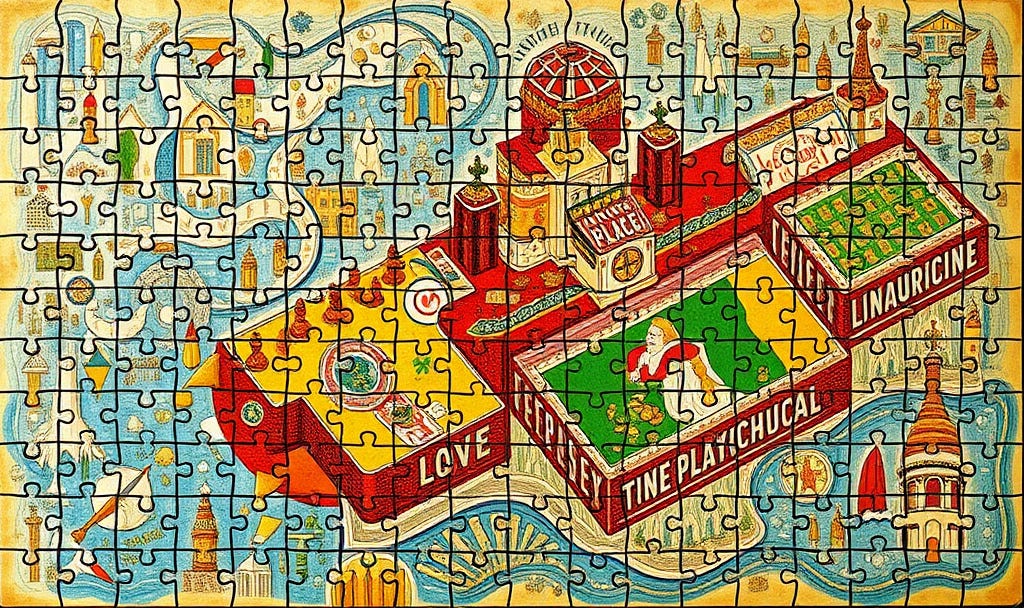
It is like solving a jigsaw puzzle.
Before enough pieces are in place, your attention can mislead you. You start filling gaps with assumptions. A piece looks important because it looks interesting or unusual, not because you actually know where it belongs. Because at this point, you are judging significance from a partial view.
So instead of looking at the blank spaces and then the hundreds of pieces scattered across the table, starting from one place and building the picture up is the right choice. And at one point, we start to see the picture, and everything becomes clear, and those pieces that we’ve been turning over without putting any effort to place somewhere now automatically go to the right place.
That is why moving quickly toward the full picture is not superficial. In many cases, it is the most effective way to read. You are not rushing past meaning. You are trying to reach the point where meaning can actually take its shape.
And that is also why the real work begins after the picture comes together, not before. Once the whole is visible, you can go back to the individual pieces and finally see what they are doing. Before that, it’s mostly just guesswork.
The interface
So in this sense, the first read of a book is best used for accumulating enough pieces to cross the gestalt threshold, and almost nothing useful can be extracted before you’ve crossed this mark. For most books, if they are of high quality, this mark comes at the second half of the book, or even at the very end.
This reframes the conventional notion of what the first read is actually for. It is not for the site of understanding. It is the precondition for it. The review phase where the rereads, taking notes, or writing a review happen is not what you do after the real reading. It is the real reading. The first pass is what makes it possible.
This applies to anything else in life, too.
As Dave Chapelle said in his comedy special, Equanimity (2017),
They call this phenomenon “standing too close to an elephant.” The analogy being that if you stand too close to an elephant, you can’t see the elephant. You gotta step back and give it a better look.
So on that spirit, What in your life might make more sense if you stopped pressing harder on the details and gave the whole thing a second look?